AI Tools
AI tools—ranging from video generators and productivity SaaS to investment assistants—are flooding the market with bold claims about boosting income and efficiency. Hype Check cuts through the noise by testing these apps against real‑world performance and pricing so you can decide which tools actually deliver value.
Where to start evaluating an AI tool
- 1Test the free tier or trial with your own real use case, not the vendor's demo prompt.
- 2Check what model or API the tool is actually built on, and compare its pricing to using that API directly.
- 3Look for independent reviews on forums like Reddit or Product Hunt, not just testimonials on the vendor's own site.
- 4Check the cancellation flow before entering a card, and read what happens to your data if you cancel.
- 5Verify any claimed user counts or integrations against a source outside the company's own marketing.
Evidence overview
How claims about ai tools across all reviewed videos stack up against the evidence.
- Claims assessed
- 120
- Strongly supported
- 18
- Mixed evidence
- 33
- Weak evidence
- 22
- Unsupported
- 14
Top claims in this topic
- “One of the reviewed tools claims to generate SEO‑optimized content that ranks on the first page of Google within a week.”Claim extracted — not yet reviewedSee evidence →
- “Recall’s AI can automatically generate marketing copy that converts at a 15% higher rate than copy written by a human marketer.”Claim extracted — not yet reviewedSee evidence →
- “Using the premium version of Tool Y can earn users an extra $1,000 per month through freelance gigs.”Claim extracted — not yet reviewedSee evidence →
Common myths about ai tools
Myth: “More expensive AI tools are always more accurate.”
Reality: Price often reflects marketing spend and UI polish more than underlying model quality — many premium tools use the same base models as free alternatives with a markup added.
Myth: “A tool with 'AI' in the name must be doing something sophisticated.”
Reality: Some tools are a thin interface wrapped around a single off-the-shelf API call, adding little beyond a prompt template and a price increase.
Evidence-aware takeaways
- ✓Test with your own real use case before subscribing, not the vendor's cherry-picked demo.
- ✓Compare pricing to the cost of using the underlying API directly where possible.
- ✓Independent reviews on neutral platforms are more reliable than on-site testimonials.
- ✓Check cancellation and data-export terms before entering payment details.
Featured this week

Best AI Video Generator in 2026 (Don't Choose Wrong)
The video reviews several AI video generation tools, comparing features and pricing to help viewers choose the most suitable option for 2026.
Youri van Hofwegen

Do Dan Martell's Recommended AI Tools Actually Make You Rich?
Entrepreneur Dan Martell claims to have tested over 500 AI tools and presents a curated selection that he asserts can generate significant wealth and operational efficiency. The video serves as a gateway to his proprietary AI tech stack and business partnership opportunities.
Dan Martell

Use.AI Review - 2026 | Stop Paying for Multiple AI Tools — This All-in-One Platform Replaces Them
This video reviews 'Use.AI', an all-in-one platform marketed as a replacement for multiple AI subscriptions like ChatGPT and Gemini. The reviewer evaluates its claims of consolidating tools to save money and time.
Daniel Davidson
All videos

Best PAID AI Tools Free Alternatives 2025 | #AITools #FreeAI #Productivity2025
The video lists free AI tools that claim to match or replace paid productivity solutions in 2025.
AW-TECHNOLOGIES

Which AI music generation tools are actually effective? Review of 100 options
Mattie reviews over 100 AI music generation tools, concluding that most are ineffective while a handful deliver impressive results.
Music By Mattie

What Basic AI Knowledge Do Beginners Miss and Is a Google Project Management Certification Needed?
The video claims most beginners lack fundamental AI knowledge and encourages viewers to enroll in Google's Project Management Certification via an affiliate link.
Jeff Su

Best Free AI Tools vs Paid Alternatives for Entrepreneurs
The video compares paid and free AI tools, highlighting a selection of free options for entrepreneurs.
Be An Entrepreneur - Taresh Singhania

Do programmers really dismiss no-code and AI development tools?
The video humorously argues that traditional programmers dismiss no‑code platforms and AI‑assisted development, suggesting they’re inferior to hand‑coded solutions.
Philipp Lackner
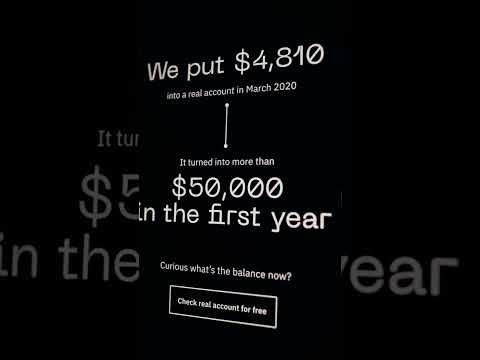
Can an AI Turn $5,000 into Profit? Jesse Eckel Tests AI Investing
The video shows Jesse Eckel giving an AI $5,000 to invest and tracking its performance over a short period.
Jesse Eckel
Related topics
Frequently Asked Questions
›Do free AI tools offer the same quality as paid alternatives for entrepreneurs?
Free AI tools can handle basic tasks, but paid versions often provide higher accuracy, larger model limits, and dedicated support, which research on AI model scaling shows improves output quality.
›How reliable are YouTubers' claims that a handful of AI tools can make you rich?
Most claims are anecdotal and lack transparent data; independent studies suggest AI can enhance productivity, but income gains depend on how the tools are integrated into a solid business strategy.
›What should I look for when evaluating an AI video generator for 2026?
Compare feature sets (e.g., script‑to‑video, customization), pricing tiers, model update frequency, and independent benchmarks on rendering speed and visual fidelity, as highlighted in recent comparative reviews.
›Can an AI really turn a $5,000 investment into profit?
Short‑term AI trading bots can generate variable returns, but academic analyses warn of high volatility and overfitting; long‑term profitability typically requires human oversight and risk management.
›Are large‑scale tests of hundreds of AI tools trustworthy?
Mass testing can reveal trends, but selection bias and limited usage scenarios may skew results; look for transparent methodology and reproducible metrics before relying on such rankings.
Free newsletter
Get the weekly digest
5 videos summarised · 3 claims checked · 1 practical takeaway
Unsubscribe any time. No spam.